
Trump Demands Fed Rate Cut as Markets Lean Toward September Hike
Key Facts
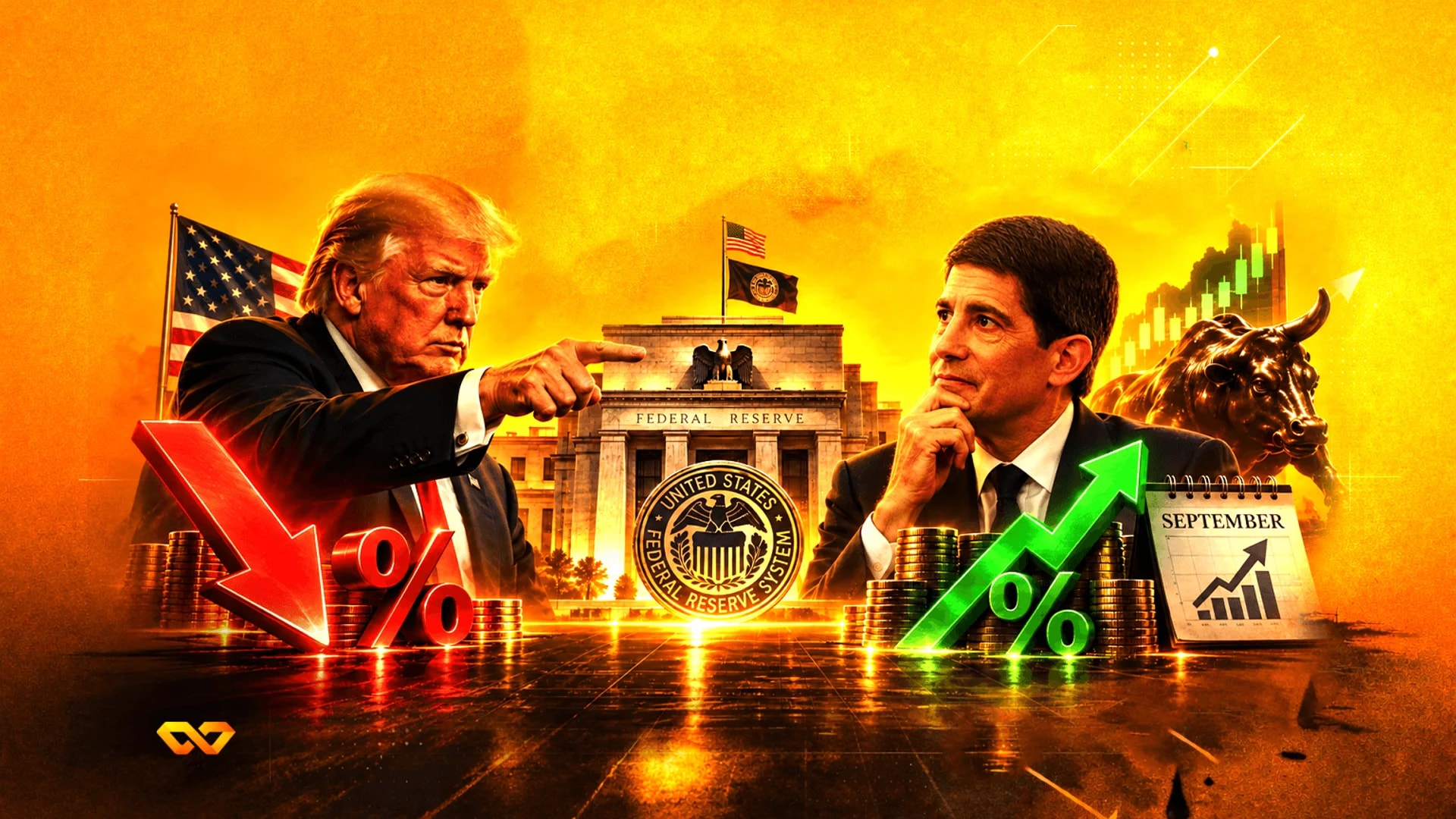
President Donald Trump intensified pressure on the Federal Reserve, demanding lower interest rates and saying on Truth Social that high rates put the United States at an unfair disadvantage. The demand came as market pricing moved toward a possible September increase—the opposite of the direction Trump wants.
Fortune reported that CME FedWatch showed a 58.4% probability on September 7 of a 25-basis-point increase, which would lift the target range to 3.75%-4%. The probability is derived from federal-funds futures prices, so it reflects trader positioning at a specific point in time rather than an official Fed decision or forecast.
The decision is due at the conclusion of the meeting on September 16.
The case for tighter policy gained support after the U.S. economy added 162,000 nonfarm jobs in August while unemployment held at 4.1%, according to the Bureau of Labor Statistics. Resilient employment gives the Fed more room to focus on inflation, but it does not make a rate increase certain.
Prices remain central to the debate. Fed Chair Kevin Warsh reaffirmed the fixed 2% price-stability target, measured by the personal consumption expenditures index, and said annual PCE inflation stood at 3.7%; the Bureau of Labor Statistics separately reported that consumer prices rose 3.4% in the year through July.
The August Consumer Price Index report is due on September 11, 2026, before the September 15-16 meeting. A strong reading could reinforce the case for an increase, while a softer report could keep a hold in play, leaving market pricing liable to change before the decision.