
US, Iran Explore Hormuz Reopening in Exchange for Lifting Blockade, Reuters Reports
Key Facts
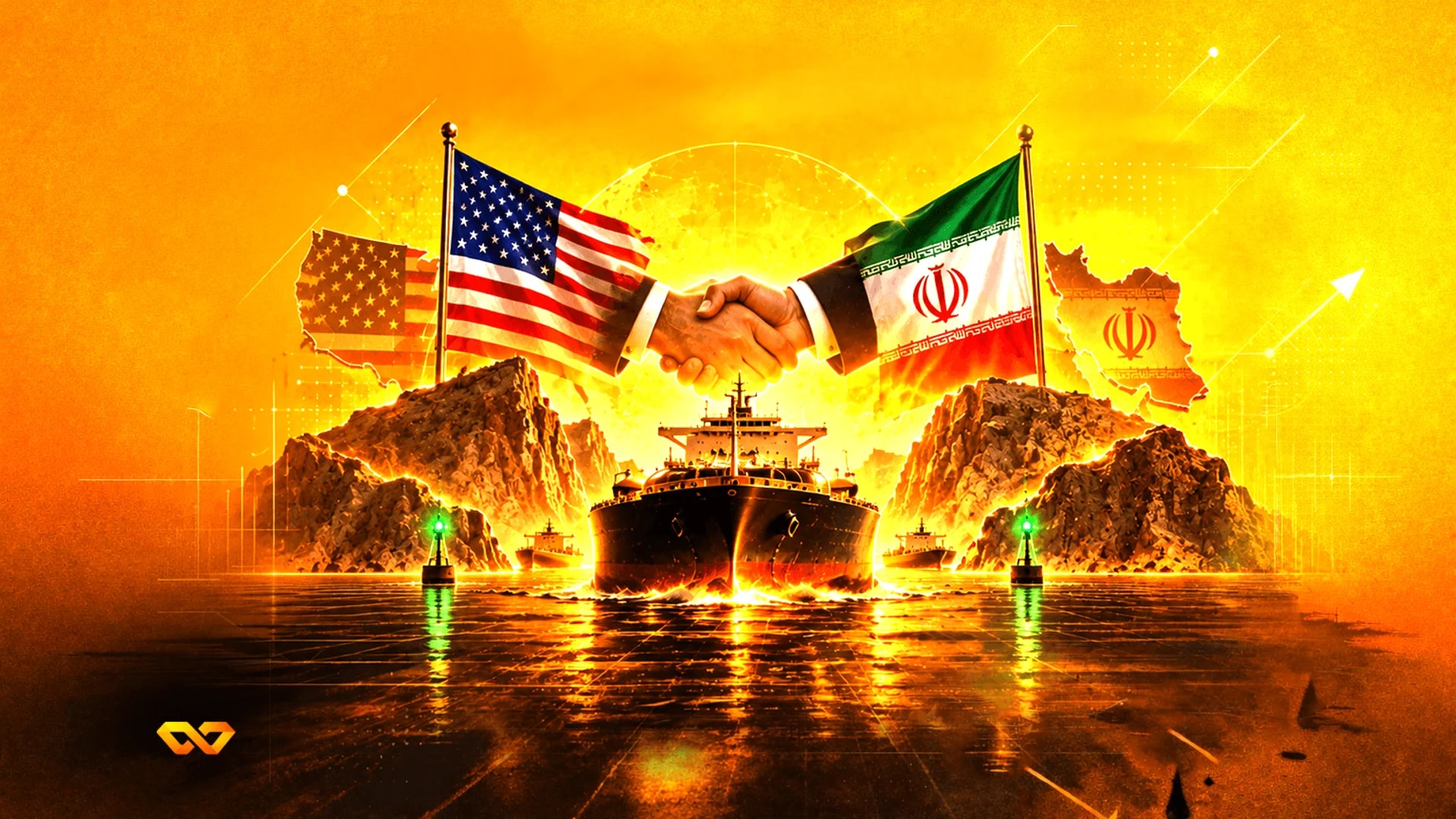
US and Iranian negotiators in New York are exploring a phased arrangement under which Tehran would reopen the Strait of Hormuz and Washington would lift its economic blockade of Iran, sources told Reuters on September 24. Neither side has announced an agreement, and the report sets out no jointly accepted timetable for the steps. The talks matter because each proposed concession addresses the pressure the other side can exert: access to shipping and relief from an economic blockade. Reuters' sources said neither party wants to surrender that leverage first. The market value of any diplomatic advance therefore rests on whether the steps can be carried out, verified and sustained, rather than on the existence of talks alone.
US Energy Information Administration figures show the scale of the disruption the diplomacy seeks to address. Oil flows through Hormuz averaged 21.6 million barrels a day in the final quarter of 2025, then fell to 4.9 million barrels a day in the second quarter of 2026. On the same basis, crude and condensate dropped from 15.9 million to 3.7 million barrels a day, while petroleum products fell from 5.7 million to 1.1 million barrels a day. Those are quarterly averages for oil volumes, rather than a count of vessels on a particular day or a measure of September traffic. They explain why sustained passage matters more to supply expectations than a small number of ships crossing on one day.
A dependable reopening would affect energy prices through expectations about supply before additional cargoes actually reach buyers. Regular tanker passage would reduce concern about delayed deliveries of crude and fuels, weakening the portion of prices that reflects the risk of interruption. If passage remains intermittent, that risk premium could persist despite progress at the negotiating table. Hormuz links the Gulf to the Gulf of Oman, so traffic through it affects exports from several countries rather than Iran alone. The diplomatic news therefore needs to be judged alongside actual flows and the terms of passage: a political announcement by itself does not ensure a cargo arrives on schedule.
A senior Iranian official told Reuters that the likeliest way forward was a staged arrangement allowing navigation in exchange for an end to the US blockade, with possible Iranian access to frozen assets. Those are elements under discussion, not terms of a final agreement endorsed by both governments. Regional sources also told the agency that Tehran might move its demand for transit fees from the main text into a side attachment. Gulf states reject the proposed fees, and such a move would be temporary rather than a formal abandonment of Iran's position, the sources said. That dispute shows why defining rights over the waterway could prove as difficult as sequencing an end to the blockade and a return of shipping.
The September 24 report followed a senior Iranian official's statement to Reuters on September 22 that Iran could reopen the strait within 7 days if the US eased military pressure and lifted its blockade of Iranian ports. The official said Tehran's proposal had been passed through mediators on September 16 and that details for ending hostilities could be discussed in New York. That sequence provides context for the current talks, but it does not establish that Washington accepted the conditions or that a 7-day clock has begun. Reuters also reported that an earlier understanding collapsed in July, putting the durability of any new arrangement in focus. For markets, a stated ability to reopen the route matters most if reciprocal steps produce stable passage.
Shipping has not moved in only one direction during the standoff. A US official told Reuters that about 60 commercial vessels passed through Hormuz on September 23, including about 40 that coordinated with the US military for protection. The official said roughly 22 million barrels of oil exited through the passage that day, the highest daily volume since early July. Reuters said it could not independently verify the official's figures. A daily account attributed to one official should not be treated as equivalent to an official quarterly average: the periods differ, and traffic can fluctuate sharply. Passage sustained over several days would offer a clearer test of improved access than one day's tally.
Buyers' direct exposure to a Hormuz disruption varies by destination, even when global benchmark oil prices move together. The EIA estimates that 89% of the crude and condensate passing through the strait in the first half of 2025 went to Asian markets. China, India, Japan and South Korea together accounted for 74% of those flows, showing where delayed cargoes would be felt most directly. By contrast, US imports of Gulf crude and condensate through Hormuz were about 0.4 million barrels a day, equal to 7% of US crude and condensate imports and 2% of its petroleum-liquids consumption over the same period. Disruption to a major export route can nevertheless affect prices paid by buyers who take few cargoes through it themselves.
The exposure extends beyond crude because liquefied natural gas, or LNG, and refined products use the same passage. The EIA estimates that 11.4 billion cubic feet a day of LNG crossed Hormuz in the first half of 2025, more than 20% of global LNG trade. It says pipelines in Saudi Arabia and the United Arab Emirates together could provide about 4.7 million barrels a day of capacity to bypass the strait during a supply disruption. That is limited beside the 20.9 million barrels a day of oil that averaged through Hormuz in the first half of 2025. A dependable maritime reopening could therefore change expectations for both oil and gas, while pipeline capacity alone cannot replace all the disrupted seaborne flow.
This year's price action illustrates how quickly expectations about navigation can move the market, without guaranteeing a repeat. The EIA said Brent's average daily price swing was $4 a barrel in April and May 2026, compared with $1 in the same months of 2025, amid uncertainty over reopening Hormuz. It also said expectations of resumed shipping following periods of de-escalation contributed to price declines during part of the second quarter. That helps explain why traders may respond to a negotiating signal before its full effect appears in physical supply. It also explains why prices could reverse if the signal fails to become regular transit backed by a durable arrangement.
The next test is how the concessions would be exchanged: would blockade relief begin alongside restored navigation, and how would each side know the other's step would last? Reuters' sources identified the dispute over who moves first as a principal obstacle, alongside the transit-fee issue opposed by Gulf states. Reuters reported that US President Donald Trump had discussed the possibility of a deal after the November 3 congressional elections, a political reference point rather than an announced deadline for an agreement. A joint announcement of specific terms followed by sustained shipping would carry more weight than further accounts of possible wording. Continued disagreement over sequencing or renewed disruption at sea would weaken the case for a lasting reduction in supply risk.