
Trump weighs strikes on Houthis after Riyadh airport attack kills 12
Key Facts
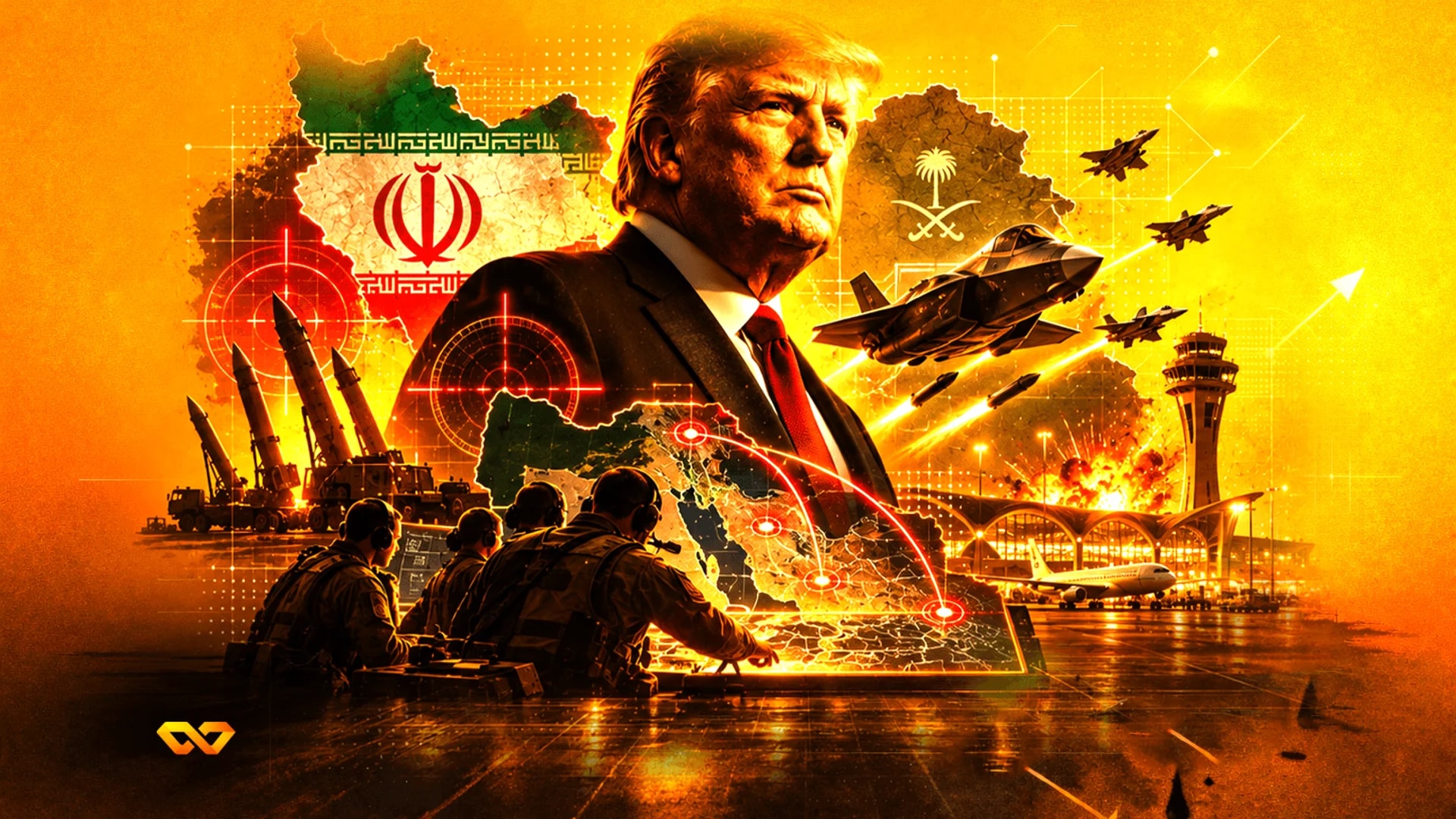
U.S. President Donald Trump said he was considering joining Saudi strikes against the Houthis in Yemen following Saturday's attack on Riyadh airport, which killed 12 people. Asked about possible U.S. involvement, he said, according to the Associated Press: "We may. We'll look into it." Civil aviation authorities said more than 300 people were injured in the attack. U.S. Secretary of State Marco Rubio condemned the attacks on the airport, Reuters reported. He said they showed "a blatant disregard for innocent civilian lives."
The attack came amid escalating fighting between the Houthis and Saudi-backed Yemeni government forces, according to the Associated Press. A major military offensive began about a week earlier as clashes between the two sides widened. The Saudi campaign and Yemeni government forces aimed to push the Iran-backed Houthis away from the Bab al-Mandab Strait, the agency said. The strait is an important passage for oil and goods trade, placing a trade route within the scope of military operations. Reuters said a ceasefire reached by Saudi Arabia and the Houthis in 2022 collapsed during the summer preceding the attack.
Flight disruptions to Riyadh had widened before Saturday's attack, with cancellations and suspended air services, according to Reuters. Data from Cirium showed 49.7% of departures from Riyadh airport had been cancelled by 1500 GMT on Thursday, October 8, 2026. Akasa Air cancelled two scheduled flights on Thursday amid disruptions affecting travel to the Saudi capital. A Lufthansa spokesperson said the group's airlines had suspended flights to Riyadh because of developments in the Middle East. The group set October 16 as the end date for the announced flight suspension, Reuters reported.
On the U.S.-Iran diplomatic track, Washington and Tehran signed an interim agreement in June, according to the Associated Press. The agreement sought a 60-day ceasefire and a framework for a permanent peace deal. Trump said on the Thursday before the airport attack that he did not plan to attack Iran before the congressional midterm elections scheduled for November 3, according to Reuters. That same Thursday, Iranian Foreign Minister Abbas Araqchi said he expected to submit a formal response to the U.S. proposal within days. Those diplomatic statements coincided with the campaign by Saudi Arabia and Yemeni government forces to push the Houthis away from Bab al-Mandab.
In markets, Brent futures fell in early trading on the Friday before the attack as some supply concerns eased following Trump's comments on talks with Iran, according to Reuters. They were down 0.7% at $103.53 a barrel by 0220 GMT. But the contracts ended the session at $104.72 a barrel, up 0.42%. Reuters attributed the higher settlement to hurricane-related disruptions to U.S. production, after prices had fallen during the session. Europe's STOXX 600 index closed up 1% that same Friday, erasing its weekly loss. Stocks rose as investors welcomed lower oil prices and yields and hoped for an easing of the war, the agency said.
Trump said he intended to speak with Saudi Crown Prince Mohammed bin Salman, according to the Associated Press. On economic events, organisers of the Future Investment Initiative announced before Saturday's strike that the conference would go ahead as scheduled. They set October 26 to 29, 2026, for the event despite flight disruptions and earlier attacks, according to Reuters. A statement attributed to the initiative's chief executive, Maha Al Saud, reaffirmed that safety remained a priority for organisers. "Safety and well-being remain our top priority," she said in the statement as preparations continued for the conference's announced late-October dates.