
Two tankers attacked near Hormuz and Sohar as Brent closes at $106.65
Key Facts
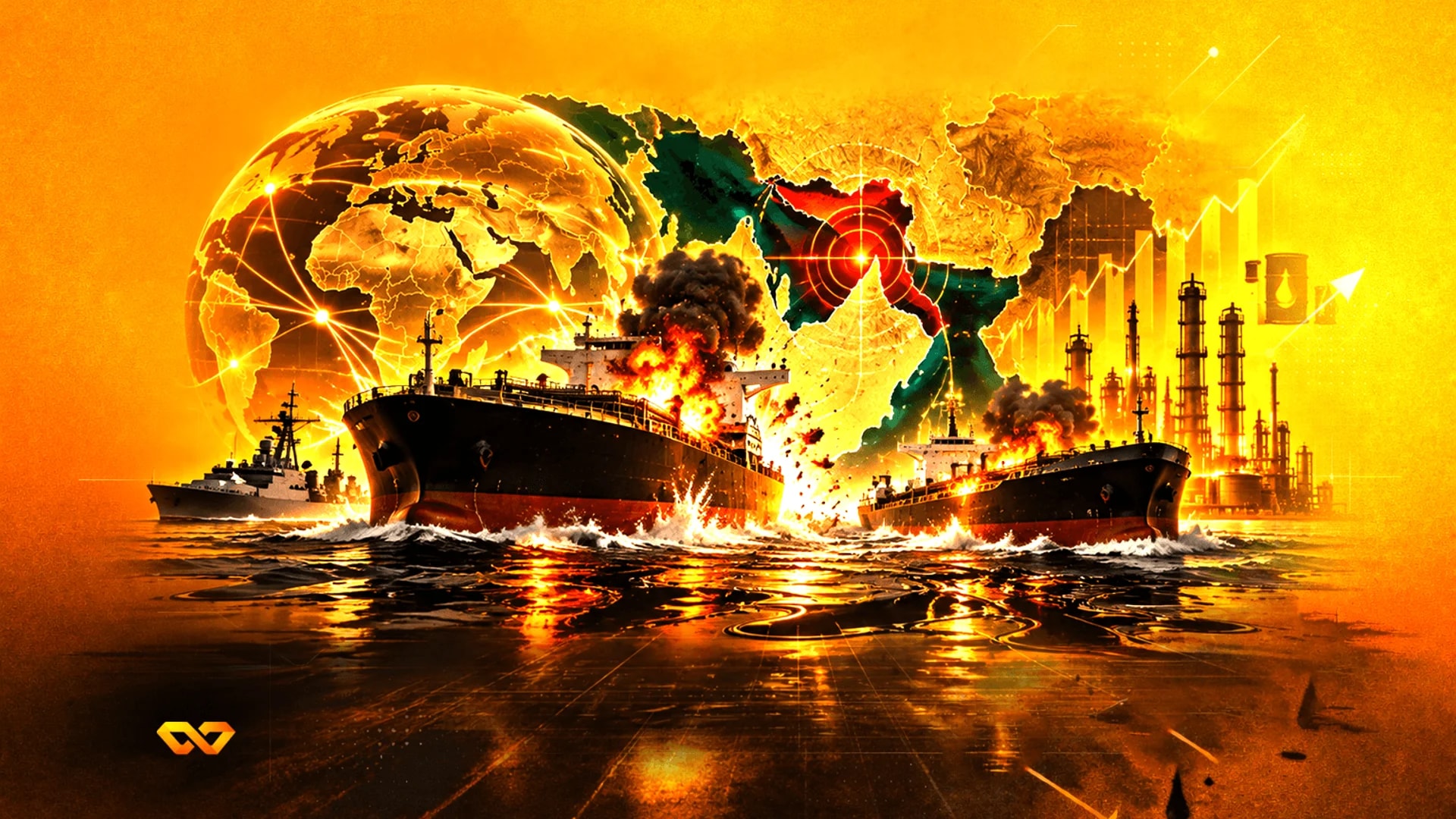
Two oil tankers were hit in attacks near the Sohar anchorage in Oman and while transiting the Strait of Hormuz, according to the United Kingdom Maritime Trade Operations, cited by Reuters, amid escalating attacks on shipping in the region. The agency said one tanker was struck by a drone near the Sohar anchorage, while the other was damaged by an unidentified projectile while transiting the strait. The two incidents thus involved a tanker near an Omani anchorage and another crossing the waterway, through which oil flows averaged 20 million barrels per day in 2024. The attacks were part of a broader escalation, with Reuters reporting on October 8 that tanker attacks in Hormuz had reached their highest weekly level since the start of the war with Iran during the preceding week. The developments also extended to the oil market, where the agency reported continued gains on Monday alongside the escalating regional conflict and attacks.
Regarding the crews, Indian Shipping Minister Sarbananda Sonowal said in a statement published on October 11, 2026, following the attack on the "Petro Dolphin", that 9 Indian crew members had been rescued and were safe. He added that two Indians remained missing, leaving the tally of survivors separate from the fate of the two sailors who had not been found, according to the statement carried by the Press Trust of India. The tanker was flying the Nicaraguan flag, according to India's state broadcaster, which named it in its coverage of the attack and the fate of the Indian sailors aboard. In the other incident, a fire broke out on the tanker "Valthera", according to Agence France-Presse, whose account was carried by the Straits Times. The agency reported that all Indian sailors aboard the "Valthera" were safe, an outcome different from the situation of the missing crew members from the "Petro Dolphin".
Warnings addressed the risks posed by strikes outside the strait to oil shipping operations, alongside attacks on tankers during transit. Brett Erickson, managing principal at Obsidian Risk Advisors, warned that these strikes threatened ship-to-ship oil transfers and supply flows, according to Benzinga. He said attacks outside Hormuz "posed a threat to ship-to-ship oil transfers", identifying a maritime activity at risk beyond the transit route itself. On the diplomatic front, India's foreign ministry called for immediate de-escalation, according to India's state broadcaster on October 12. The ministry stressed that the ongoing conflict should be resolved through dialogue and diplomacy, in a statement issued after the attacks on commercial vessels in the Hormuz region.
The strait's importance to oil markets is reflected in the volume of Saudi exports that passed through it, with the kingdom's crude and condensate shipments reaching 5.5 million barrels per day in 2024, according to the U.S. Energy Information Administration. Those shipments represented 38% of total crude flows through Hormuz that year, according to the administration. Liquefied natural gas exports from Qatar and the United Arab Emirates also pass through the strait, according to an International Energy Agency paper updated in February 2026. Qatari exports transiting it account for about 93% of the country's total LNG exports, according to the agency. The proportion rises to 96% for UAE LNG exports using the waterway. Together, these Qatari and UAE flows represent 19% of global LNG trade, extending Hormuz's importance to gas supplies alongside oil shipments.
Among alternative crude export routes, a UAE pipeline connects onshore oilfields to the Fujairah export terminal on the Gulf of Oman, bypassing the Strait of Hormuz, according to the U.S. Energy Information Administration. The pipeline has a capacity of 1.8 million barrels per day, according to the administration's June 2025 report on the waterway and energy flows through it. The pipeline provides a route to transport oil from onshore fields to the export terminal on the Gulf of Oman instead of passing through the strait. More broadly, the International Energy Agency estimated in its February 2026 paper that available pipeline capacity to divert crude exports onto routes bypassing Hormuz was about 3.5 to 5.5 million barrels per day. The agency's estimate concerns potential capacity to redirect crude flows away from the strait, while the UAE pipeline specifically connects onshore fields to the Fujairah outlet.
At the close of trading on October 12, Brent futures settled at $106.65 per barrel, according to a subsequent Reuters update on oil prices as the conflict and attacks continued. The daily gain was $1.93 per barrel, or 1.8%, taking the benchmark to its highest close since September 15. For December 2026, Goldman Sachs raised its Brent price forecast to $90 per barrel, Reuters reported on October 12. The bank's previous estimate for the same month was $85 per barrel, before the revision reported by the agency. On the missing sailors, India's state broadcaster said in its October 12 update that the local coast guard was continuing search and rescue operations for those missing from the "Petro Dolphin".