
Container ship sinks in Hormuz; all 21 crew evacuated safely
Key Facts
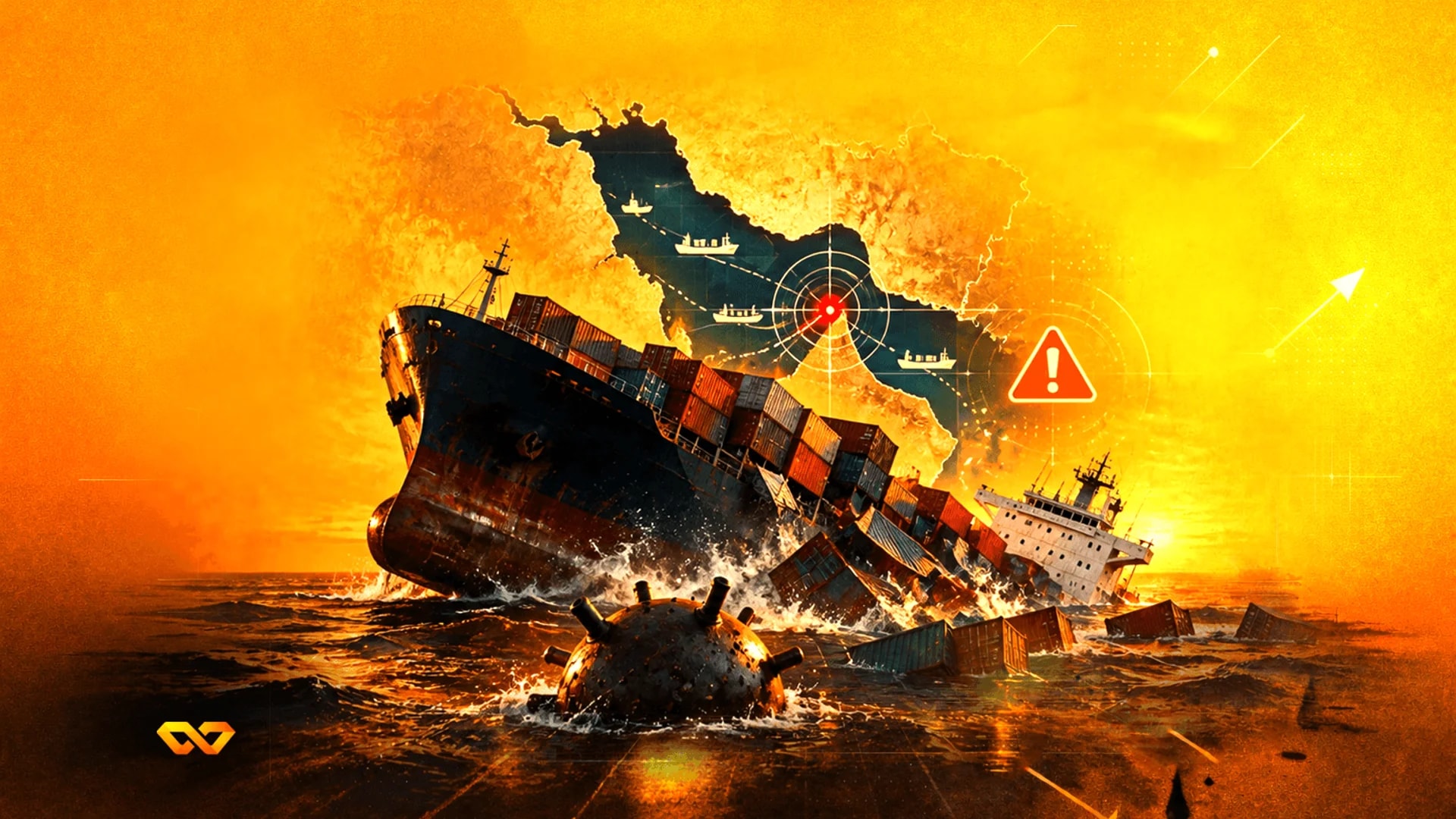
The Maritime and Port Authority of Singapore confirmed that the container ship "GFS Pride" had sunk after sustaining damage and a fire on board, with all 21 crew members safely evacuated. The sinking followed two incidents in which Singapore-registered ships were struck by unidentified projectiles in the Strait of Hormuz, according to the authority's account. All 22 crew members of the other vessel, "GFS Giselle," escaped without injury, according to the Business Times. The ship reached a safe anchorage under its own power, the newspaper said. Describing what happened to the sunken vessel, the authority said: "GFS Pride sustained damage and a fire on board, and has since sunk."
The sunken vessel had a capacity of about 2,824 twenty-foot equivalent units, according to maritime security sources cited by Reuters. It was managed by UAE-based GFS Ship Management, the news agency said. Alongside Singapore's confirmation of the sinking, Iran said a vessel had struck a naval mine in the strait, according to the Associated Press. The agency said it was unclear whether the vessel Iran referred to was the same Singapore-registered ship that sank. Singapore authorities continued to describe the cause of the strikes on the two ships as "unidentified projectiles," without specifying the type of weapon that hit them.
The sinking followed attacks on oil tankers in the region in late September, including the "Al Ruwais," "Mersin Prosperity" and "Sindbad," all flying the Liberian flag, according to the Business Times. In a separate incident, the bulk carrier "Cape Dau" sank near the strait, Reuters reported, citing International Maritime Organization data. That vessel had been hit by a projectile on September 23, weeks before it sank. Regarding transit arrangements, the U.S. military had been directing ships along a route through the strait closer to the Omani coast, according to the Associated Press. Iran said its intensified strikes were in response to the U.S. blockade of its ports and tighter sanctions, according to Reuters' account of the Iranian position.
In regional shipping, AD Ports Group had increased its stake in Global Feeder Shipping to 81%, according to its June announcement of the ownership increase. The group's business continuity measures included diverting shipping operations to Fujairah terminals and Khorfakkan port, according to its results statement issued in August. The diversions also included feeder services, using these two locations outside the Strait of Hormuz. On the performance of those services, the group said volumes declined during the second quarter. However, it said higher feeder rates more than offset the decline in volumes, linking the business's performance during that period to pricing as well as cargo volumes transported.
Oil flow figures illustrate the scale of the change in transit through Hormuz in the periods preceding the incident. Oil passing through the strait averaged 20 million barrels per day in 2024, according to the U.S. Energy Information Administration, a historical level predating the war. In a more recent comparison, The National cited the agency as saying flows reached 21.6 million barrels per day in late 2025. They then fell to 4.9 million barrels per day during the second quarter of the reporting year, according to the newspaper's August report. The decline in that comparison thus spanned late in the previous year through the second quarter, before news of the container ship's sinking in the strait.
In a subsequent update following the original report of the sinking, Brent crude closed Thursday's session at $105.92 a barrel, according to Reuters. It settled down 14 cents, or 0.13%, the agency said. Crude's move came as investors weighed regional risks against the possibility of easing restrictions on oil tankers, according to Reuters' description of the factors influencing the session. On the status of the two vessels, the Maritime and Port Authority of Singapore said it was in contact with the company managing them. The authority added in its statement that it was "monitoring the situation closely," while maintaining contact with the management company following the vessel's sinking and the evacuation of its crew.