
MSCI freezes Turkey index changes, ties classification outlook to progress by 2027
Key Facts
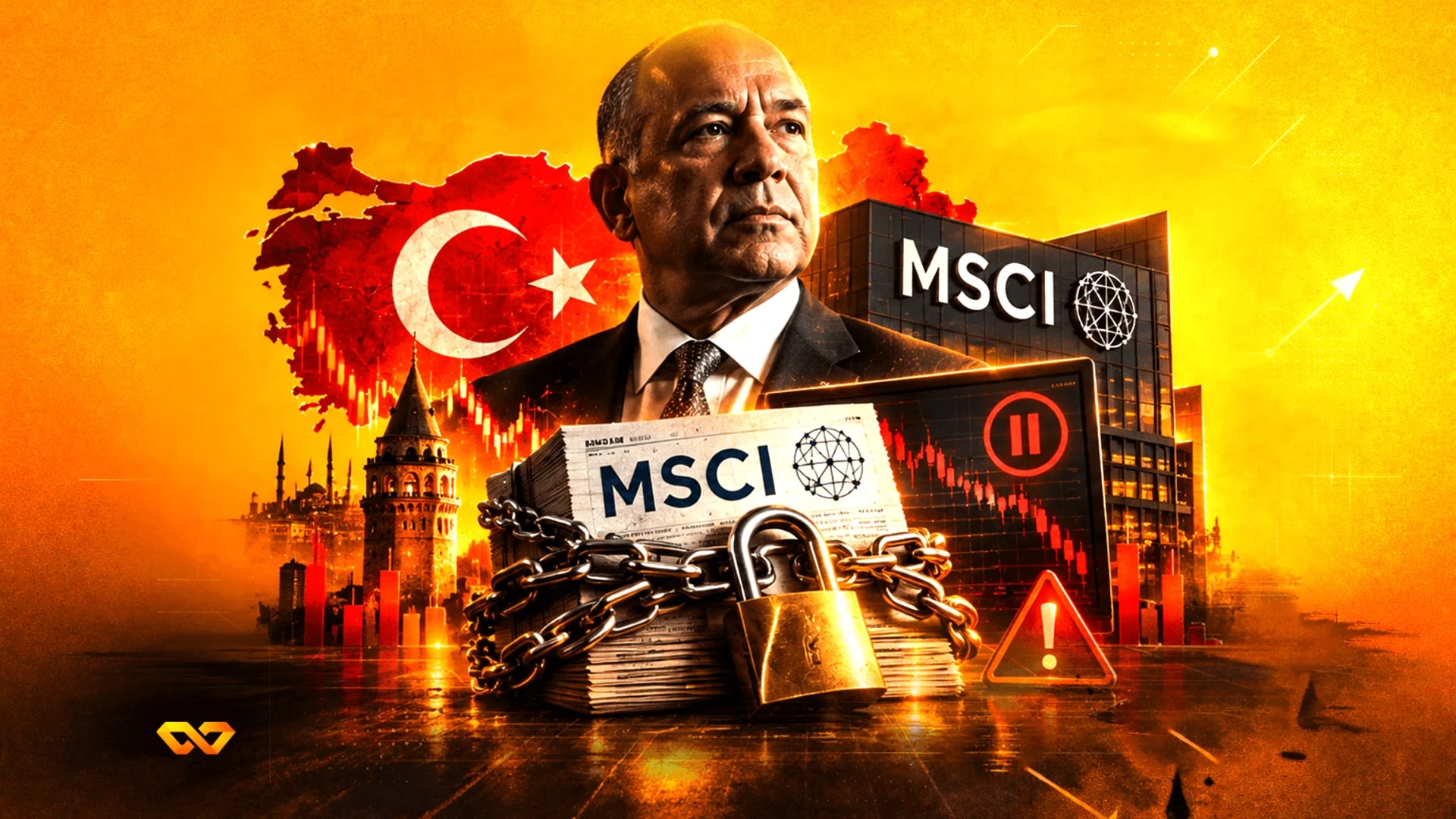
MSCI froze certain changes to its Turkish equity indexes, effective immediately and until further notice, while retaining the country's emerging-market classification. The company said in its announcement that the treatment covers adjustments arising from index reviews and corporate events involving Turkish securities. The decision halts increases in foreign inclusion factors and the number of shares included in the indexes. It also suspends additions to the MSCI Turkey Investable Market Index and migrations to higher size segments. The company specified that the measures would remain in effect "until further notice". The importance of retaining the current classification is underscored by Reuters' report that a future downgrade to frontier-market status could prompt funds tracking the company's emerging-market index to sell.
The concerns stem from recurring instances of potentially coordinated trading reported by institutional investors, according to the company's market classification review findings. Those instances involve holdings by funds closely linked to certain small listed Turkish companies. MSCI said the conduct in question results in "artificially inflated free-float estimates". In its market accessibility review, the company downgraded Turkey's information-flow assessment because of limited transparency in shareholder structures. The report also linked that assessment to coordinated trading that impairs price formation, placing ownership transparency and the integrity of free-float estimates at the heart of concerns about the market.
The suspension of these categories of adjustments marks a shift from the previous treatment, which relied on assessing Turkish securities individually when concerns arose over their investability. According to an earlier company update on the treatment of Turkish and Indonesian equities, that assessment allowed the free float of an individual stock to be reviewed. It also allowed some shareholders to be reclassified from free-float to non-free-float ownership. This included holdings by specific funds, as part of an approach focused on the nature of shareholders in the security concerned. Under that individual treatment, the company stipulated that clients would be notified of these changes before implementation.
On the regulatory front, Turkey's Capital Markets Board adopted a framework excluding certain fund holdings from free-float calculations, according to MSCI's review. The exclusion applies when the beneficial ownership of those holdings rests with parties already excluded from the calculation. Investors' demands include detailed and timely beneficial ownership disclosures to help assess the actual ownership of shares. The reforms sought also include strong oversight and enforcement against coordinated trading. Investors are calling for a transparent, rules-based framework to identify securities with structurally distorted free floats. That framework includes addressing such cases, alongside improving disclosure of ownership structures.
The decision comes against a backdrop of broader observations about investors' access to information in the Turkish market. MSCI's market accessibility report noted that corporate information and regulations are not always available in English. The report, meanwhile, described investment registration procedures as mandatory but efficient. The MSCI Turkey Index comprises 12 companies, according to its factsheet preceding the announcement. The index targets the large- and mid-cap segments and covers about 85% of the Turkish equity universe, according to the factsheet.
The company set June 2027 as the date for assessing whether sufficient progress has been made in addressing the concerns. In the absence of such progress, it said it would consider further action on its Turkey indexes. Such action could include launching a consultation on a downgrade from emerging-market to frontier- or standalone-market status. The subsequent classification path therefore hinges on an assessment of progress, followed by consideration of a possible consultation. MSCI will reassess the treatment of its Turkey indexes as part of its 2027 annual market classification review.