
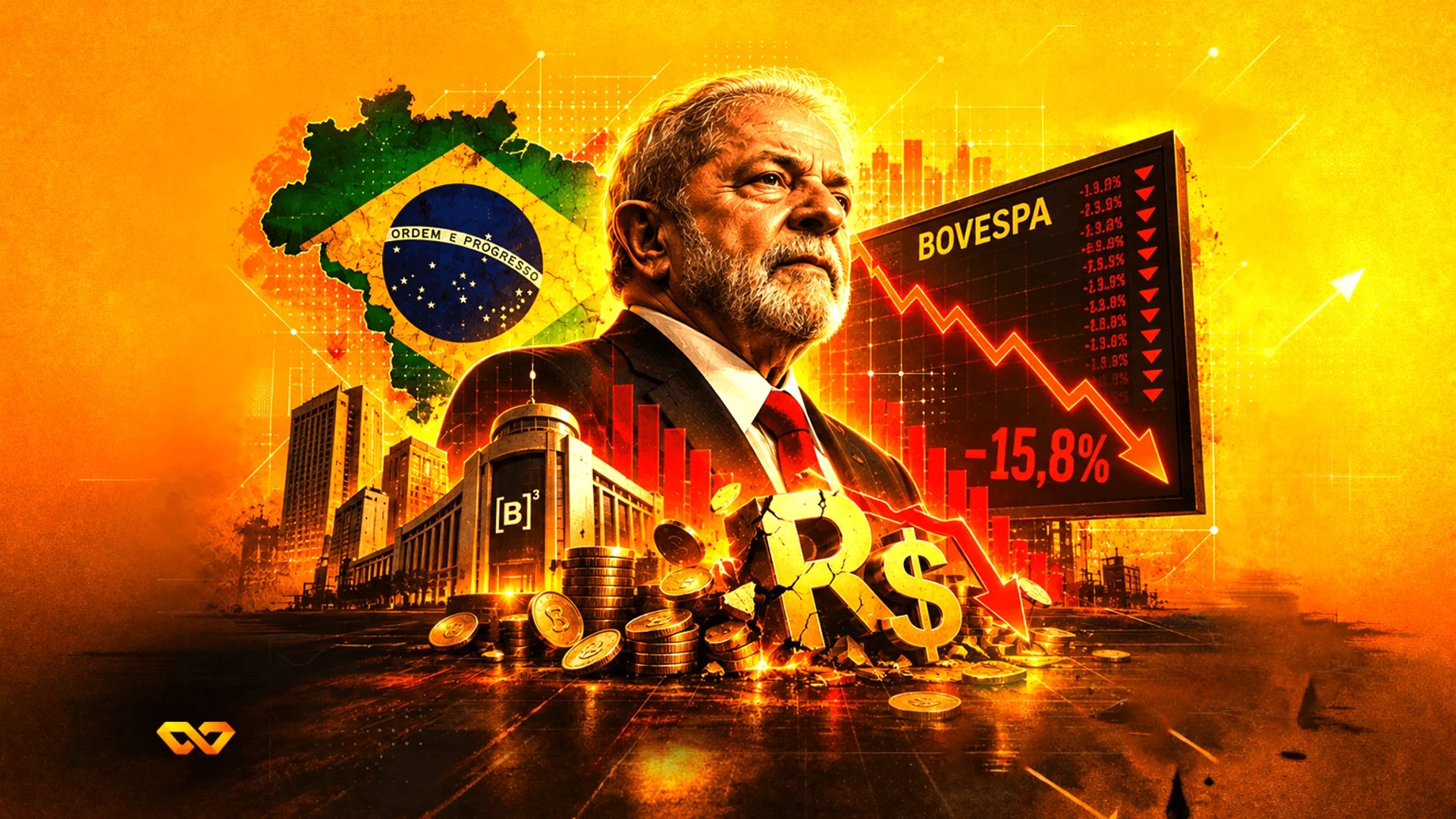
Bovespa falls more than 15% in biggest daily drop since 1998 after Lula re-elected
Key Facts
The Bovespa index fell more than 15% during the October 26 session, its biggest daily decline since 1998, before trimming losses by the close, according to a Reuters report published via MarketScreener. The drop followed the re-election of Luiz Inácio Lula da Silva, as investors' concerns about the fiscal policy direction in his new term resurfaced. Brazil's exchange halted trading for 30 minutes after the index's decline exceeded 10% from its previous close. The currency's move also reflected a swift reversal: the dollar traded at 4.9652 reais on October 23, then 5.3767 reais on October 26 and 5.4088 reais on October 27, according to EL7 data. The sharp fall in Brazilian assets was an early test of how markets would respond to the government's fiscal priorities after the election.
The sell-off followed a period of improved performance for Brazilian assets ahead of the vote. The Bovespa had closed the previous Friday about 7% above its level before the first round, while the real was about 5% stronger against the dollar over the same period, according to Reuters. But Lula's victory reversed those bets and brought concerns over campaign pledges and public spending back to the fore. Investors are focused on whether the new administration can combine higher real wages and employment with control of public finances. An economist at Oxford Economics said the biggest challenge was convincing markets that Lula could deliver a "credible and sustainable fiscal adjustment" while prioritizing real wage growth and employment.
The government faces this test with public debt exceeding 82% of gross domestic product, according to Reuters, while Lula's administration is targeting a primary surplus of about 1.3% of GDP by 2030. The combination of high debt and the surplus target means the budget path will be central to investors' assessment of the administration's policies. The challenge is not limited to the level of spending; the government needs to convince markets it has a feasible path to meet its fiscal target. The president's ability to pass his proposals is also part of the calculation. A Reuters Breakingviews analysis said the right-wing and centrist majorities in both chambers of Congress could curb spending ambitions, but could also obstruct efforts to raise revenue and stabilize debt. The fiscal program therefore faces political constraints on both spending and revenue.
Concerns were also reflected in investors' stance toward sovereign debt. JPMorgan analysts downgraded Brazilian government bonds to "underweight" and warned that sovereign credit was vulnerable to a correction unless market pressure prompted fiscal concessions, according to Reuters. The decision put debt instruments among the assets reassessed after the election result, alongside stocks and the currency. The Treasury had canceled auctions of inflation-linked and fixed-rate bonds, while keeping the LFT securities auction scheduled for Tuesday, October 27, in place. The Treasury said it was monitoring market conditions, as investors awaited concrete signals on government financing and its fiscal plan.
Attention in the coming days is turning to the choice of finance minister and signals about the policy agenda, two issues Barclays analysts said markets would watch after the election. Before the October 26 session, the analysts had said the dollar-real pair could initially head toward the 5.50 range amid concern that campaign promises pointed to a more expansionary fiscal stance. These signals form part of investors' assessment of the economic policy direction after the victory, alongside debate over the budget and relations with Congress. On the data front, the Brazilian Institute of Geography and Statistics calendar sets October 30 for publication of the monthly PNAD Contínua survey reading for the September 2026 reference period. The calendar also sets November 18 for publication of the quarterly survey covering July to September 2026; both are upcoming releases on the labor-market calendar.