
DoorDash to Acquire Instacart in $17 Billion Deal at 26% Premium
Key Facts
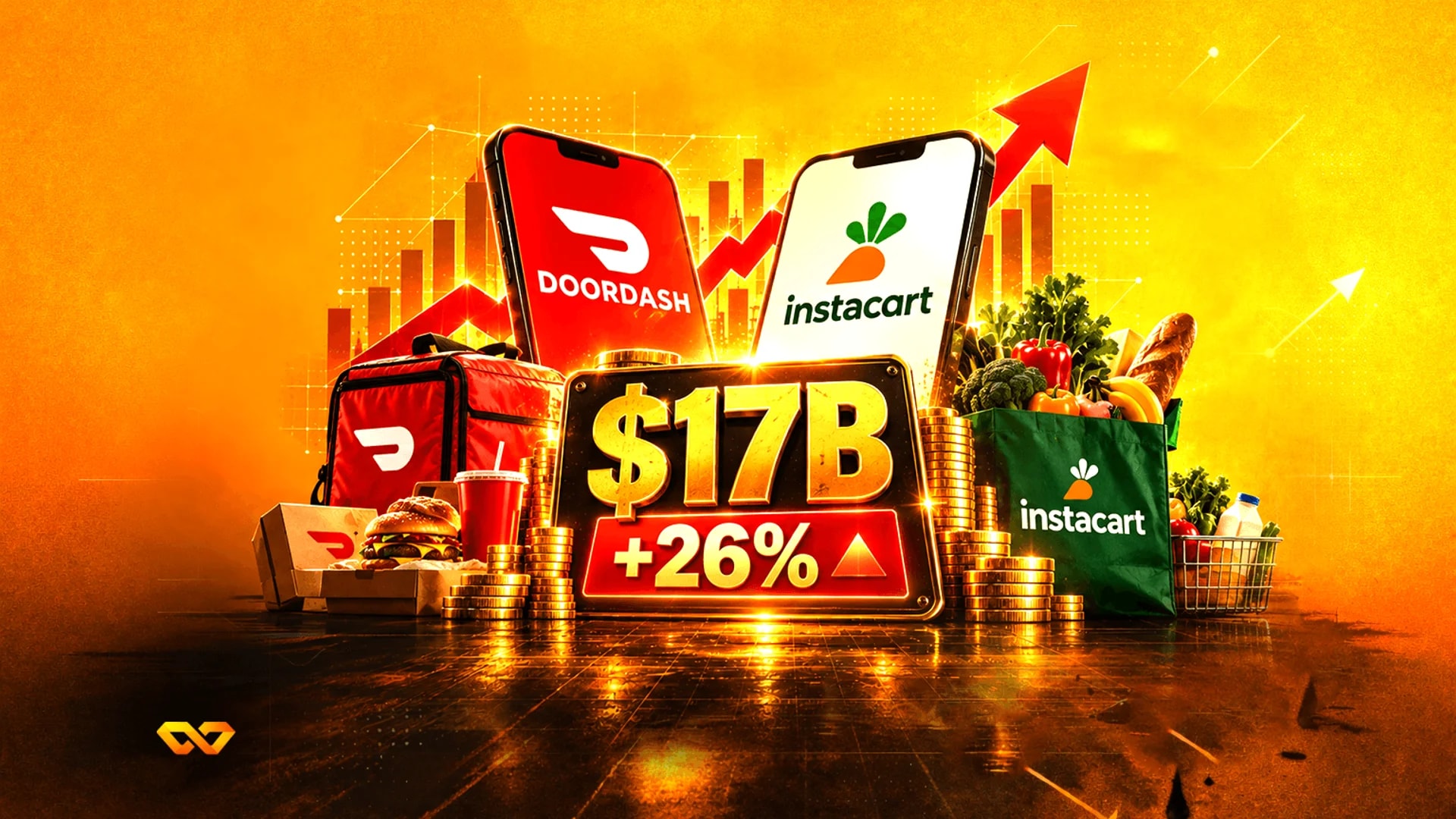
DoorDash has agreed to acquire Instacart in a deal valued at about $17 billion, the company said in an announcement on October 29, 2026. The agreement gives Instacart shareholders options including $65 in cash per share, 0.3372 DoorDash shares, or a mix of $48.75 and 0.0843 shares. The price represents a 26% premium to Instacart’s closing share price on October 22, the reference price set by the agreement. Instacart’s board approved the deal unanimously, and shareholders holding about 19% of the outstanding shares have pledged to vote in its favor. The deal comes as DoorDash expands in grocery and retail, seeking to add Instacart’s technology and network in the sector to its platform.
DoorDash said Instacart customers could gain access to more than 50,000 additional stores after the deal closes, on top of the roughly 100,000 stores available on the platform at the time of the announcement. The companies estimate that DashPass and Instacart+ members will save $100 million a year in membership fees by paying one fee instead of two. Potential areas of integration include expanding grocery services and order fulfillment through DoorDash’s network, alongside Instacart’s technology tools for retailers. DoorDash Chief Executive Tony Xu said the companies could “give stores of all sizes more of those tools and unlock the potential of grocery delivery.” He added that the company sees increased shopping at local stores as keeping more money in local communities. DoorDash also said grocery stores could use DashMart Fulfillment Services to increase online order capacity and offer faster, more accurate and lower-cost delivery.
The deal comes as spending-share data show a shift in the competitive balance between the platforms over five years. According to Consumer Edge data cited by the Associated Press, Instacart’s share of spending on U.S. delivery platforms fell from 26% to 18%, while DoorDash’s share rose from 44% to 59%. That shift puts the combination of Instacart’s grocery expertise and DoorDash’s broader network at the heart of the deal strategy. DoorDash operates in 40 countries, the Associated Press reported, and fulfilled more than 3 billion orders in the previous year through a network of 9 million independent delivery workers. Over the same period, Instacart fulfilled about 338 million orders. Founded in 2012, the company focuses on grocery delivery and convenience stores in the United States and Canada. DoorDash said the Instacart brand and app will continue after the deal, and that about 600,000 independent shoppers will keep fulfilling orders.
Third-quarter results from both companies provide operational context for the deal. Instacart reported gross transaction value of $10,528 million, up 15% year over year, and revenue of $1,095 million, up 17%. Net income was $147 million, while adjusted EBITDA reached $342 million, up 23%. The company also completed 91.4 million orders, up 10%, and generated $331 million in advertising and other revenue, up 23%. Instacart’s chief executive called it “our best quarter as a public company,” citing growth in transaction value and advertising. DoorDash said U.S. grocery and retail gross order value growth during the quarter was more than twice the growth rate of the restaurant category.
DoorDash, in turn, announced its third-quarter results on October 29, after moving the announcement from November 4 to before the market opened on the day of the announcement. The company said it posted quarterly records for marketplace gross order value, revenue and net income. Net income under generally accepted accounting principles rose to $466 million, up 91% year over year, while adjusted EBITDA increased 41% to $1,060 million. On financing, DoorDash expects to fund the cash portion of the consideration with available cash and proceeds from debt financing. JPMorgan committed to provide a 364-day senior unsecured bridge loan facility to support the debt component, while the agreement does not include a condition allowing either party to walk away if financing is not secured.
The prospect of regulatory scrutiny remains one of the main obstacles to closing the deal. Reuters reported that the acquisition is likely to face scrutiny from the U.S. Federal Trade Commission, which is focused on affordability issues, and that the companies’ overlap in grocery delivery could draw an antitrust review. The Associated Press pointed to concerns that reduced competition and increased consolidation could harm consumers, potentially raising prices and limiting grocery stores’ negotiating options. The company, by contrast, has highlighted expanded shopping options and membership-fee savings for consumers. DoorDash shares rose 5.6% on the day the agreement was announced, according to the Associated Press’s report on Thursday’s session, while the news agency said the stock gained 6% in early trading and Instacart shares were unchanged.
The companies are targeting completion at the end of 2027 or during the first half of 2028, subject to approval by Instacart shareholders and completion of regulatory reviews, including in Canada and Israel. Instacart canceled its earnings call scheduled for November 5 after the agreement was announced. DoorDash released its results on October 29, after its previous announcement date had been set for November 4. The target timetable means the agreement could remain under review for more than a year before closing, with regulatory and shareholder approvals still outstanding conditions. The deal offers potential expansion in grocery services and tools for retailers, while putting it to a regulatory and consumer test over competition and prices.