
Washington Proposes Escrow Account for Russian Gas Revenues in Transit to Europe via Ukraine
Key Facts
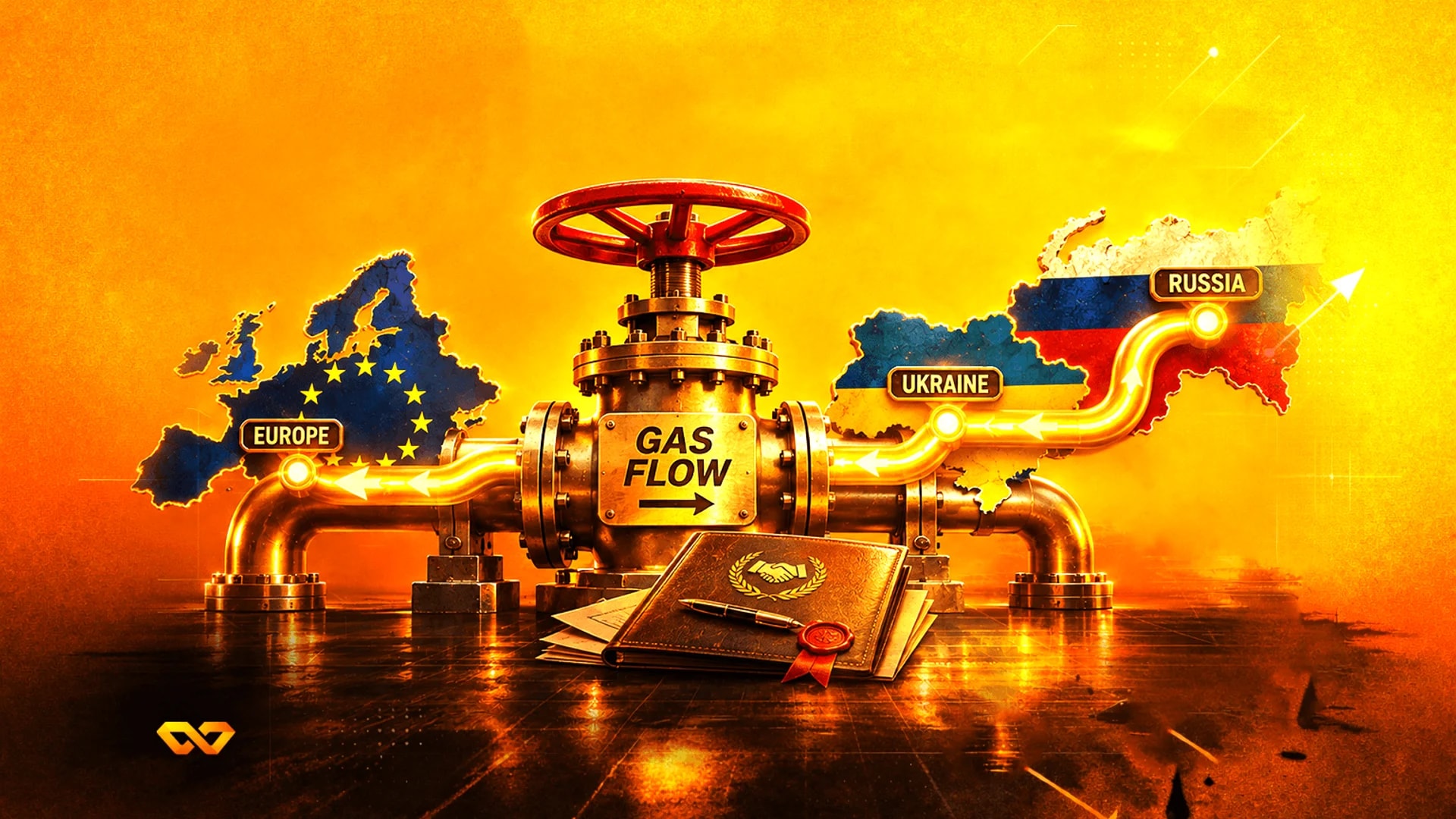
U.S. President Donald Trump’s administration has discussed a proposal to resume sales of Russian gas to Europe through Ukrainian pipelines, seeking to use energy trade as an incentive to halt attacks on Ukraine’s power grid. Under a report published by The Wall Street Journal, a U.S. intermediary could sell Russian gas to European buyers, while Ukraine would receive transit fees. The proposal calls for sales proceeds to be deposited in an escrow account under the jurisdiction of a third country, restricting Moscow’s access to them. The Moscow Times, citing Reuters, reported that the idea was raised during talks in September 2026. The report said the plan was presented as an incentive for Moscow to stop strikes on Ukrainian energy facilities, but it remains a negotiating proposal, not an announced arrangement to resume flows.
The plan’s structure places gas revenues and transit fees at the center of negotiations, giving Kyiv income from the passage of supplies while making Russia’s access to sale proceeds subject to the escrow account’s terms. The Wall Street Journal quoted the White House as saying, "The White House wants Russia to deposit the proceeds from gas sales into an escrow account in the jurisdiction of a third country." That means the proposal combines a resumption of gas trade with a mechanism to restrict the use of Russian revenues, alongside a U.S. role in commercial mediation. The published information does not specify potential volumes or the value of the fees, and does not name the buyers or the country where the funds would be deposited. No European approval or agreement with Kyiv and Moscow on these arrangements has been announced.
The proposal was raised as the Kremlin played down the prospect of Russian gas shipments to Europe through Ukrainian pipelines resuming soon. The report carried by The Moscow Times, citing Reuters, said Moscow does not see a return of transit as imminent. That position presents a direct obstacle to a plan based on halting attacks on energy facilities and reopening the transport route. The proposal of incentives does not establish that Moscow has agreed to stop the strikes or that the September talks produced an understanding on energy. The plan therefore remains at the level of a U.S. proposal, amid Russian skepticism about near-term implementation.
Any return of Russian gas faces a European legal constraint that goes beyond political disagreement over resuming supplies. Under European Union law, a ban on imports covered by long-term contracts for liquefied natural gas begins on 1 January 2027, while a ban on pipeline gas begins on 30 September 2027. The latter date could be delayed to 1 November 2027 if gas storage targets are not met. The schedule means a potential resumption through Ukraine would have to take account of the ban dates and transition periods, as well as government approvals and commercial arrangements. The report did not explain how the proposal could be reconciled with European restrictions or whether it includes a legal exemption.
Germany illustrates the shift in Europe’s gas market since Russia invaded Ukraine in February 2022. Germany had bought more than half of its gas needs from Russia via the two Nord Stream pipelines before the invasion, according to Reuters. Germany’s Economy and Energy Ministry said Russian gas and the Nord Stream pipelines are subject to sanctions in Europe, and that the country had found alternative supplies. The ministry added that reopening the pipelines would require government approval and that it did not want to do so. Reuters also said Poland and the Baltic states reject energy links with Russia, and that Poland’s political leadership strongly opposes restarting Nord Stream. These positions concern Baltic pipelines and ties with Russia more broadly; they do not amount to a unified announcement on the proposed Ukrainian transit plan.
The proposal for transit through Ukraine remains separate from discussions about restarting Nord Stream under the Baltic Sea. Le Monde reported on 29 October that proposals to resume Nord Stream were theoretical and that their preparation began in February 2025 under Kirill Dmitriev, the Kremlin’s envoy to the United States. The newspaper linked large-scale pipeline gas projects to the lifting of Western sanctions if fighting in Ukraine stops. The reported U.S. plan, by contrast, concerns gas sales through Ukraine, with fees for Kyiv and an escrow account for revenues in a third country. The routes differ, as do their political and financial terms, and discussion of one does not mean an agreement on the other has been reached.
On the diplomatic front, talks between Ukraine, Russia and the United States were expected in Abu Dhabi during November, but the Associated Press said on 28 October that no date had been set. Ukrainian President Volodymyr Zelenskyy said a date could be set for the period between 6 and 10 November, after the U.S. midterm elections scheduled for 3 November. The agency added that Washington was waiting for developments in the Middle East before setting a date for the talks. It is unclear whether the gas proposal will be discussed at the potential meeting, and no final date has been announced. If held, the talks could provide an opportunity to test whether energy incentives and the escrow mechanism will become part of broader negotiations.