
Putin Warns War Would Resume Immediately if Europe Deploys Troops in Ukraine
Key Facts
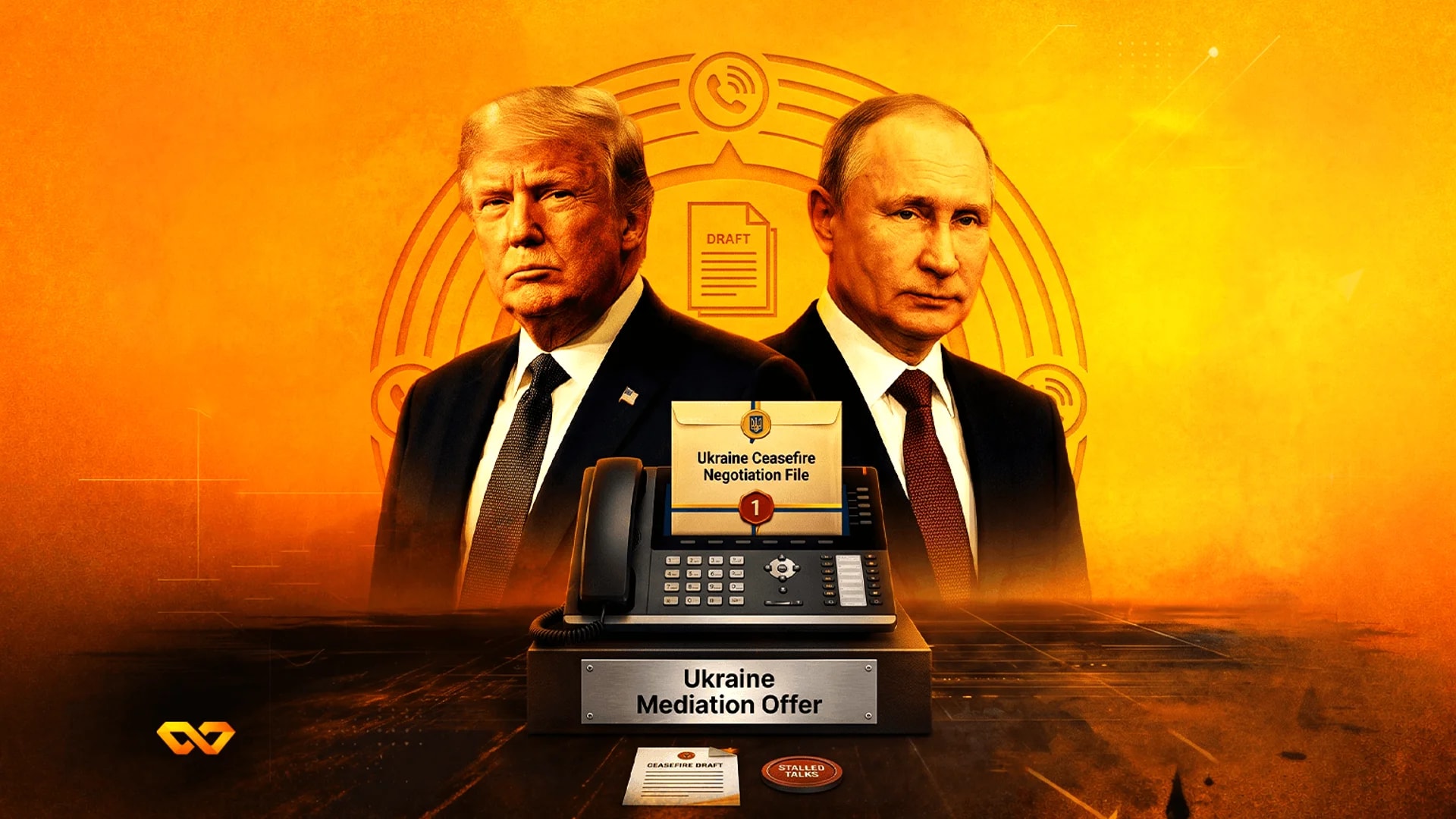
Russian President Vladimir Putin warned on November 12 that deploying European troops in Ukraine after a ceasefire would be unacceptable, and that Moscow would consider those forces a security threat and legitimate military targets. Putin said the war would "resume immediately" if that happened, putting the presence of European troops at the heart of the dispute over postwar arrangements. The position came during his meeting at the Kremlin with U.S. President Donald Trump’s envoys, Steve Witkoff and Jared Kushner. The meeting lasted about two hours, before the two envoys traveled to Dublin to meet Ukrainian President Volodymyr Zelenskyy for more than an hour. On the same day, European leaders discussed the continent’s security in Dublin, while the form of security guarantees for any settlement remained a point of contention between Moscow, Kyiv and their allies.
Kushner said one goal of the meeting with Putin was to secure his agreement to European representatives taking part in discussions on broader security arrangements for the continent. Witkoff said the next round of talks had been agreed and that Europeans would join, while Zelenskyy said Europe would participate with a delegation that would have a voice in the negotiations. But Europe’s presence at the negotiating table does not settle Moscow’s position on deploying troops on the ground after a ceasefire; Putin explicitly rejected that possibility. This highlights the gap between European participation in shaping the arrangements and Russia’s acceptance of a European security role inside Ukraine. Zelenskyy said the discussions covered security guarantees for Ukraine and a new security framework between Europe and Russia, calling for Europe to become a regular part of the negotiations.
The talks in Abu Dhabi between the Russian and Ukrainian delegations were their first direct discussions in nine months, but did not achieve a major breakthrough. The round ended with an agreement to exchange a large number of prisoners of war, without announcing the number at the time. Zelenskyy said in an address at the Dublin summit that the prisoner exchange agreement was important for bringing Ukrainian soldiers back from Russian captivity. He added that Europeans had taken part in the discussions, but were not yet a direct party at the table with the Russians. European security advisers also attended the Abu Dhabi talks on the sidelines, without participating in the main trilateral discussions. The announced outcome was therefore a humanitarian step, while the core political and security issues remained unresolved.
On the regional file, Putin said the borders set by a peace agreement with Ukraine should include the four Ukrainian regions Moscow annexed in 2022, even though it does not fully control them. That position puts territorial issues among the outstanding questions in any agreement, alongside security guarantees and Europe’s role. NATO Secretary-General Mark Rutte said the United States, Europe and Ukraine were "largely aligned" on the form of security guarantees. But he said what was needed now was a peace agreement or, at least, a ceasefire. In Dublin, European Council President António Costa said Europe had a functioning security architecture before Russia gradually undermined and destroyed it by invading Ukraine, and urged that this be taken into account in any future discussions.
Kremlin adviser Yuri Ushakov said Thursday’s talks were substantive, constructive, frank and useful. He added that Moscow would update its proposals on reducing NATO deployments in Central and Eastern Europe with new ideas, drawing on its earlier proposals from 2021. Ushakov did not specify the new ideas, but linked them to Moscow’s proposals concerning the alliance’s deployments in Europe. Alongside the diplomatic track, fighting continued along a 1,200-kilometer front line, or about 750 miles. Leaders from more than 40 European countries gathered in Dublin for a European Political Community summit focused on the continent’s security, with Zelenskyy and the NATO secretary-general taking part.
Ushakov said Putin would continue discussing the war with Trump during a planned meeting in China next week. The expected talks follow Putin’s meetings with Trump’s envoys and Zelenskyy on November 12, and Washington’s announcement that Europeans would join the next round. The deployment of European troops remains one of the most sensitive issues after Putin linked their presence to an immediate resumption of fighting. Moscow’s demands over the four regions and security guarantees also remain central to talks that produced no major political breakthrough in Abu Dhabi. The China meeting is expected to continue discussions on the war, while the next round is set to include European participation, according to Witkoff.