
U.S. Approval of 879,868 Chips for China Puts Export Licensing Before Congress
Key Facts
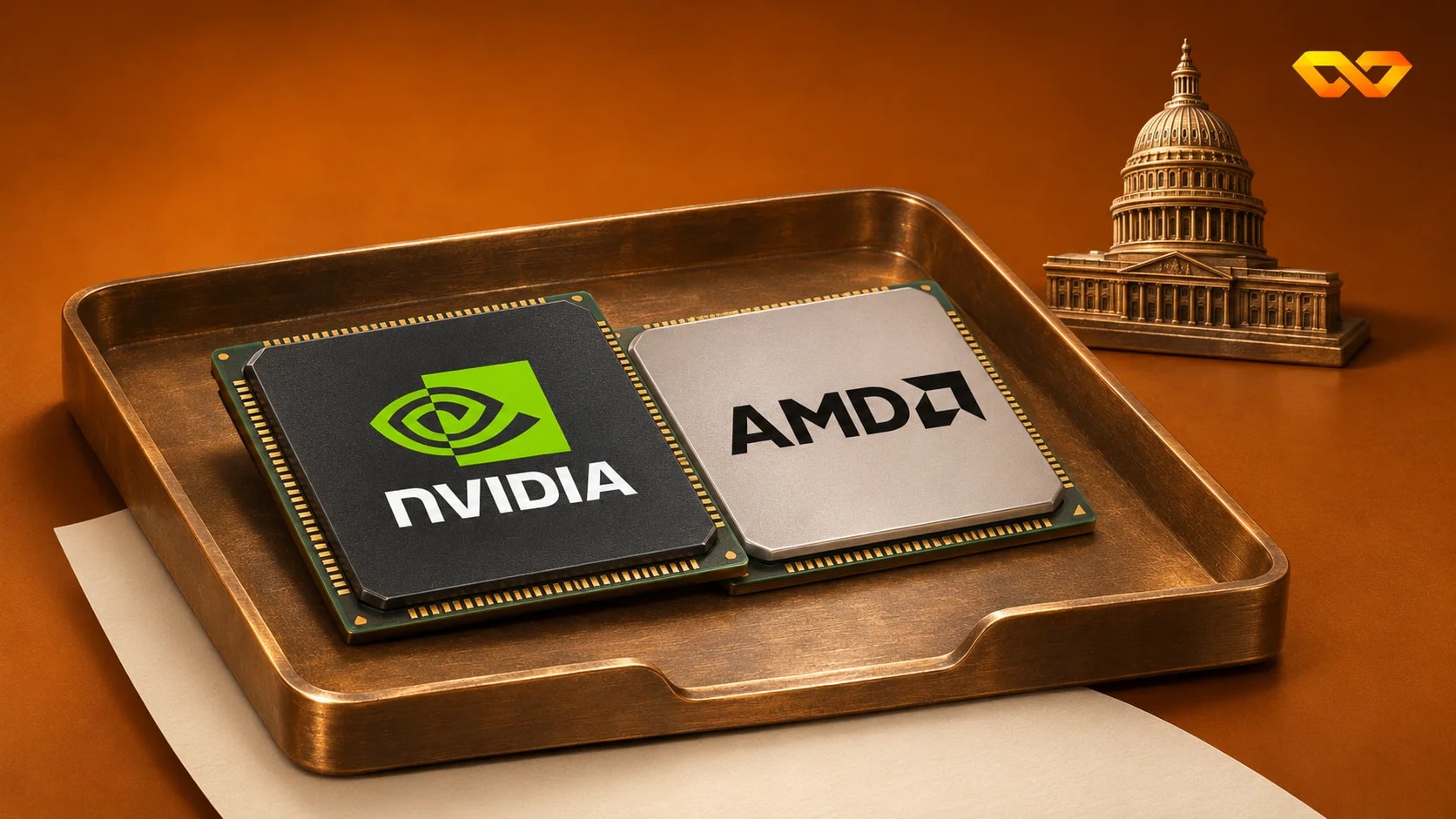
The U.S. House Foreign Affairs Committee said the Bureau of Industry and Security had approved, as of May 11, 2026, the export, re-export or transfer of 879,868 restricted integrated circuits to Chinese companies across 21 license applications. The committee published the disclosure on November 19, putting license reviews at the center of congressional scrutiny of the enforcement of controls on advanced AI chip exports. Applications covered 3,444,160 integrated circuits, according to the committee's summary. The gap between the total requested and the amount approved highlights the scale of decisions reviewed by the bureau, but does not mean the approved quantities were actually shipped to buyers. The data concern Nvidia H200 and AMD MI325X chips, as defined by the committee's description of the covered circuits.
Alibaba accounted for the largest detailed figures cited by the committee: the company and its affiliates requested 948,950 chips, while approvals covered 75,000 for it. By contrast, the requested and approved quantities matched in the published figures for Tencent, Baidu and BYD: 150,000 for Tencent and its affiliates, 43,000 for Baidu and 4,000 for BYD. The committee said all four companies are listed on the U.S. War Department's latest 1260H list of Chinese military companies, published in June 2026. That explains why the companies appear in the congressional disclosure; their listing does not establish that any shipment reached them. The application and approval figures also remain a record of licenses covered by the summary, not a count of completed shipments.
In details of Nvidia applications reviewed by the committee, all but two named Megainfra, Beijing New Matrix, ZTE Kangxun and Lenovo, or their affiliates, as entities that could install the systems in data centers. The committee said the materials described the risk of diversion for every Nvidia and AMD application as “low.” But the summary did not cover every application the committee said it had reviewed; one example was an Nvidia application dated December 19, 2025, to export 445,000 H200 chips to Tencent. These details add specific names and quantities to the debate over how export applications are assessed and which entities may use the systems. The risk descriptions in the applications do not establish that the chips were transferred or used in any particular way.
Alongside congressional scrutiny, California Attorney General Rob Bonta issued an investigative subpoena to Nvidia on November 19. The state Department of Justice said the investigation asks whether the company's advanced chips or confidential information reached China, and whether the company misled investors and the public. Bonta said his office is investigating whether actions by Nvidia or its CEO, Jensen Huang, led China to obtain advanced chips or confidential information, and whether the company misled investors about that risk. These questions raise the possibility that products or information reached China, but do not determine that this happened or establish a violation. The congressional and legal inquiries put export operations and compliance risks under scrutiny at the same time.
The Bureau of Industry and Security rule allows case-by-case review of applications to export certain chips to China and Macau, including Nvidia H200 and equivalents such as AMD MI325X, according to the U.S. Federal Register. It also requires that combined shipments to China and Macau not exceed 50% of the total product shipped for U.S. end use, alongside conditions related to supply, security and third-party testing. Nvidia said in its filing for the second quarter of fiscal 2027 that it was unable to sell all products for which it had obtained licenses because of restrictions imposed by the Chinese government. It added that it incurred a charge of $0.4 billion in the first half of the fiscal year, related to H200 inventory and excess purchase obligations. The company said the licenses require H200 chips to be inspected in the United States before shipment, and that any chips of this model shipped under the program are subject to a tariff when imported into the United States.
The scrutiny comes as Nvidia continues to report strong growth in data-center revenue, the main driver of its advanced-chip business. On November 17, the company reported fiscal 2027 third-quarter revenue of $115.8 billion for the quarter ended October 25, up 103% year over year and 20% from the previous quarter. Data-center revenue was $107.6 billion, up 110% year over year and 21% quarter over quarter. For the fourth quarter, the company forecast revenue of $130.0 billion, plus or minus 3%. It said its forecast assumes no data-center computing revenue from China, while its shares closed at $145.98 on November 19, according to EL7 data.
Gregory Meeks, the committee's ranking member, said congressional oversight would include public hearings with Commerce Secretary Howard Lutnick and Jeffrey Kessler, the under secretary of the Bureau of Industry and Security. House committee chairs asked Huang to attend a closed-door, transcribed interview on December 1, 2026. The interview is a next step in Congress's review of license applications, after the committee disclosed the total requested and approved by the bureau. The date comes as California's investigation continues to raise questions about whether chips or information reached China. Attention will turn to whether the congressional hearings and Huang's interview provide further details about the review of applications and the safeguards tied to them.