
EL7 Research is institutional research on US stocks, artificial intelligence, semiconductors, bonds, currencies, gold and central banks, built on data we own rather than rewritten headlines. Our research agents work from the EL7 market database and from primary documents: SEC filings including 10-K, 10-Q and 13F forms, central bank data, positioning reports (COT), earnings results and years of price history. Every figure is verified before it reaches the page, every term is explained the first time it appears, and every article carries original charts and a last-updated date. New articles are published weekly, and published ones are re-checked when the facts move. The result is institutional depth in plain language: research you do not have to decode, but can act on in the market.

On 25 August, we published a scorecard of eight items and deliberately left all eight verdict fields blank. Today, we fill them in using the 10-Q filing and the CFO’s commentary, not the share-price move: $96.2 billion in revenue, $108 billion in guidance, GAAP profit exceeding adjusted profit for a fifth quarter, and supply commitments rising from $119 billion to $279 billion.
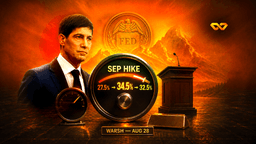
Between our listening guide published on 20 August and the Jackson Hole podium on Friday morning, the market did not wait.

The IGV application software index fell 24.3% in Q1 2026, then rebounded 36.4% from its trough to stand just −3.6% year to date, while 110 percentage points separate Datadog (+66.0%) and Intuit (−44.2%) within the same sector.
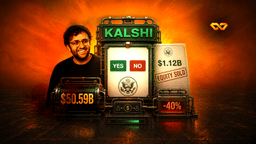
On 25 August 2026, Kalshi filed a form with the US Securities and Exchange Commission showing that it had sold 1,120,010,122 dollars of shares since April. In the preceding month, the three largest prediction markets traded 50.59 billion dollars of contracts in thirty days — while capital actually at risk in outstanding contracts fell by roughly 40%.

On the morning of Wednesday 26 August, one narrative spread: oil fell because Oman and Iran agreed on a temporary shipping corridor in the Strait of Hormuz. This research places that narrative against two gauges reading the same window. The price gauge shows Brent lost 6.16% in two sessions, with at least half the move preceding the document to which it is attributed.
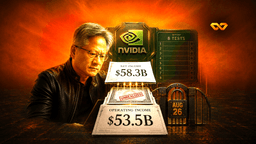
NVIDIA will report Q2 results for fiscal 2027 tomorrow, Wednesday 26 August 2026, after the US market closes. Rather than write an analysis open to interpretation after the figures are released, we do the reverse: today — before the release — we set out what we published over the past two weeks, the line that will adjudicate each claim, the number that proves it and the number that disproves it.
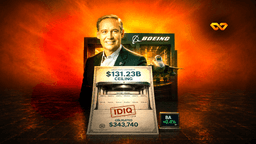
On 24 August 2026, the US Department of War awarded Boeing a contract with a ceiling of 131,230,000,000 dollars. In the penultimate line of the same announcement is a second figure: 343,740 dollars is what the government actually obligated at signing. Both figures are correct, with a 381,771-fold gap between them.

Every piece of energy research we have published has been about the barrel: who owns it, who can prevent its passage, and what it is worth when routes close. This is the first study of what is made from the barrel.
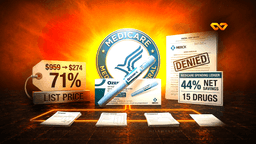
On 24 August 2026, the federal district court in Washington concluded a lawsuit that had lasted three years, two and a half months: it rejected Merck's petition in full, ruled for the government, and dismissed the case with the words, “this is a final, appealable order.” This closes the constitutional avenue against the largest change in US drug pricing in sixty years.

Volkswagen’s works council said restructuring could affect up to 140,000 jobs, while management cites 100,000. The difference is not a disagreement over arithmetic but over probability — the right entry point into an industry on which we have not previously published a word.
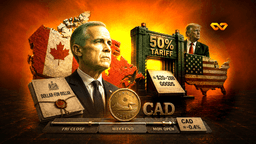
Trade negotiations between Washington and Ottawa collapsed late Friday, hours after the US president spoke of a “near-complete” deal. Tariffs of 50% on roughly 20 billion dollars of Canadian imports took effect in the first minute of Saturday morning. The weekend separated two prices: Friday’s close before the collapse, and Monday’s open after it.

On 19 August, Merck and Moderna announced that the first personalised mRNA cancer therapy had succeeded in a Phase 3 Trial, sending the stock to its largest daily gain in history and adding around 45 billion dollars to market capitalisation in a single session.
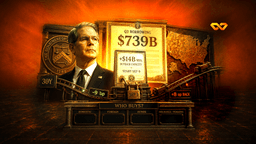
The US Treasury promised to double its purchases of long-term bonds, and the yield fell 9 basis points in a single session. Before spending one dollar under that promise — implementation does not begin until 9 September — the bond market recovered 8 of the nine points. This research measures the full round-trip move and identifies what erased the announcement’s impact and what retained it.
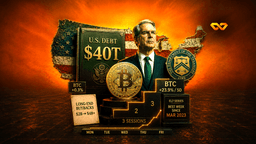
Coverage differed between “best since 2021” and “best since 2024”, and our price series extending to 2009 settles the measure. But the timing of the rally matters more than its description; almost the entire weekly advance occurred in just three sessions, between the Treasury announcement and the fund window’s closure on Friday.

A letter from Berlin, Madrid and Rome reopens a tax case closed two years ago. EL7 data show that the market itself treats these profits as a temporary windfall.

We begin with the machine itself — what it consists of, how it is sold, and where profit accumulates along its chain — then turn to stocks through the EL7 score. The result is that our quantitative model, a general model that knows nothing about robotics, ranks the sector exactly as this research does.
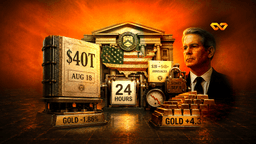
On the day US debt crossed $40 trillion, gold fell 1.86%. It jumped 4.35% the following day on an announcement whose implementation has not yet begun.

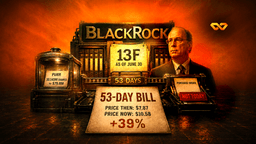
The dollar figures in the headlines are correct — but the document describes 30 June positions, not today’s positions.

We start with the machine itself — what it consists of, what it costs part by part, who buys it and how — then move to stocks read through an EL7 score.

In the largest US electricity market, volume rose only 1.7% — and one transformer explains 10.6% of the bill.
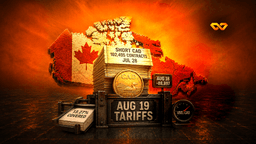
Hedge funds reached 102,495 short contracts on 28 July — the largest since 2006 — then covered 13.27% of them before the tariffs took effect.

Hyundai's union halted all of the company's plants in South Korea for the first time in ten years, with an unprecedented item at the forefront of its demands: no robot may be deployed in the factory without an agreement. In the same week, China's equity market placed a record premium on the world's largest maker of Humanoid Robots, machines that mimic the human form.

All analysis is focused on the Strait of Hormuz. But the UAE's decision on 19 August did not affect the maritime corridor: it closed the financial and trade corridor through which around one-third of Iran's imports pass — a door no navy can open or close.

The US Treasury moved on three fronts: the foreign-exchange market, dollar liquidity and debt management. These fronts defend one thing: foreign investor demand for Treasury securities. Measuring the remaining effect of each intervention reveals a clear difference between an instrument accompanied by actual spending and another limited to a promise.
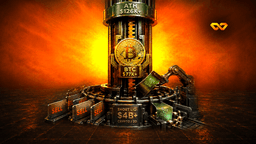
Bitcoin rose 23.9% over five sessions, its largest gain since 2024. But most buying did not come from new money; it came from short sellers forced to close their positions. Despite the rally, the price remains more than a third below its all-time high.

The 75% net profit decline dominated headlines and was attributed entirely to AI spending. A detailed reading of the filing reveals a different picture: less than one-third of the decline stems from operating investment, while cloud computing profit itself more than doubled. But the reported figures exclude a larger number that has yet to be recognised.

The 60-day truce ended without an agreement, and Strait of Hormuz traffic shifted to the Omani corridor guarded by the US Navy, disrupting Iranian transit-fee collection. Yet Brent rose for four consecutive sessions — because Tehran offset what it lost on the map with missiles, and because the US safety net itself is nearing its lows.
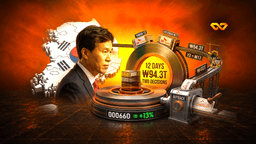
In twelve days, the company made its two largest commitments in its history: 54.3 trillion won for two new fabs, then 40 trillion won for the largest share buyback and cancellation in the history of listed Korean companies.
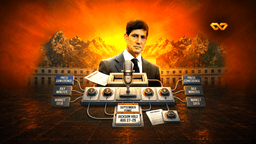
The Jackson Hole Symposium (Jackson Hole) convenes from 27 to 29 August under the title “Financial Innovation: Implications for Payments and Policy”, with Kevin Warsh (Kevin Warsh) delivering its keynote for the first time as Chair of the Federal Reserve — after removing Forward Guidance from the institution’s communications toolkit, and just 19 days before the September rate decision.