EL7 Research is institutional research on US stocks, artificial intelligence, semiconductors, bonds, currencies, gold and central banks, built on data we own rather than rewritten headlines. Our research agents work from the EL7 market database and from primary documents: SEC filings including 10-K, 10-Q and 13F forms, central bank data, positioning reports (COT), earnings results and years of price history. Every figure is verified before it reaches the page, every term is explained the first time it appears, and every article carries original charts and a last-updated date. New articles are published weekly, and published ones are re-checked when the facts move. The result is institutional depth in plain language: research you do not have to decode, but can act on in the market.

We place the evidence on both sides of the scales. The official-buyer side includes a record figure, a stated Polish target, and continued Chinese purchases for a twenty-first month; the sceptical side includes the weakest first half since 2022, clear price sensitivity, and sellers within the official sector itself. We then assess the balance of evidence without exaggeration.

The case presented: a private company the market values at around $1tn, seeking to raise more than 60 billion dollars from the public in roughly 60 days, “according to reports”. This file presents the documents, examines the figures, and reaches a valuation judgment.

The all-in cost of mining one Bitcoin has become higher than the value of the coin itself, while AI labs are paying three times the revenue per megawatt under contracts spanning twenty years. This report documents the deal, places it within the sector's transformation wave, and presents its scorecard based on our database. It also shows what this means for Bitcoin.



In one week: Alphabet borrows 25 billion dollars, Nvidia assembles a Wall Street alliance to mobilise 500 billion in external capital, and Intel sells 15 billion in shares. This report follows the dollar: from the bond desk, to the construction site, to the circular loop through which it returns to the pocket of its spender — and to the holes through which it leaks.


An expanded version of our report published this morning.





A complete practical guide to building a research system with a 314-agent AI swarm inside Kimi K3: the architecture, the free downloadable prompt, an interactive simulator, and a candid audit of every number it produced — including exactly where it broke.

Three decisions on three consecutive days, and for the first time in years the debate in Washington and London is about raising rates, not cutting them. This report sets out the full context, what happened at previous meetings, market and investment-bank expectations, and the likely scenarios for each bank.

What is stock tokenization? How it works, who funds it (BlackRock, Ondo, Securitize), institutional forecasts ($2–30T), the SEC-aligned US model, and hedging — distilled from 600+ EL7 news stories.

An in-depth analysis of SK Hynix's (SKHY) Nasdaq debut — the largest US listing by a foreign company, raising $26.5 billion.

The Bank of England held Bank Rate at 3.75%, as expected, but the key development was the vote split: two members — Megan Greene and Huw Pill — voted to raise it to 4.00%, completing the hardening of the hawkish wing. This was an interim meeting outside the Monetary Policy Report: no new forecasts and no press conference — the vote and minutes are the full message.

The Federal Reserve held rates at 3.50% – 3.75% as expected, but the event was in the tone rather than the number: the most hawkish statement of the entire cycle, with forward guidance removed entirely, a dot plot that eliminated the 2026 cut and split between hikes and cuts, and Kevin Warsh's first press conference as Chair, in which he launched five working groups to re-engineer how the Federal…

The decision is largely settled: rates to be held at 3.50% – 3.75% for the fourth consecutive meeting. But the substance lies elsewhere — the dot plot, revised economic projections (SEP), the statement's tone, and Kevin Warsh's first press conference as Federal Reserve chair.
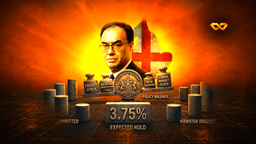
From four doves seeking a cut in February, to unanimity in March, to a hawkish dissenter calling for a hike in April — the debate within the Monetary Policy Committee has been turned on its head. The story is no longer when to cut, but whether that hawkish dissent hardens into a bloc.

The question is no longer whether the Bank of Japan will raise rates again, but when — at this interim meeting or at the forecasts meeting on 30-31 July. The base case is a dovish hold at 0.75%, with a 6-3 vote and three dissenters calling for a hike, alongside a genuine roughly one-third probability of an actual rise to 1.00%.

The European Central Bank raised its three interest rates by 25 basis points, the first increase since 2023. The decision was not a response to an overheating economy, but to a supply shock: the war in the Middle East and disruption to oil shipments pushed energy prices higher and lifted the inflation path, prompting the Governing Council to act rather than wait.


The latest Beige Book depicts an economy growing at a slight to moderate pace in ten of twelve districts, but carries the most hawkish reading in the 2026 series: inflation accelerating on energy costs linked to the Middle East conflict, consumption sharply divided across income groups, and an almost frozen labour market.

The European Central Bank left interest rates unchanged, but did not offer markets a reassuring hold. The key message is that inflation risks have risen and growth risks have fallen, and that a rate increase was discussed within the Governing Council before it chose to wait for additional data and the June projections.

The Bank of England held Bank Rate at 3.75%. This is not a rate increase. The confusion stems from Huw Pill being the only member to vote to raise rates to 4.00%, while eight members voted to hold — the first split on the Monetary Policy Committee since the holding cycle began.
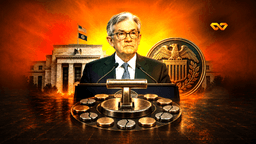
The Federal Reserve held rates at 3.50% – 3.75%, but the 8-4 vote revealed a rare split: Miran sought a cut, while three governors rejected the dovish tilt in the statement. At the podium, Jerome Powell bade farewell to the chairmanship before being succeeded by Kevin Warsh on 15 May.

A detailed reading of what the market expects in rate decisions, statements, press conferences, and the impact of each scenario on the dollar, euro, yen, sterling, bonds, equities, gold and oil.

Markets enter central bank week with unprecedented short positioning in US bonds, while sterling reflects excessive pessimism that leaves it vulnerable to sharp volatility.